

The history of the Earth is a history of humans fighting for survival. Humans have warred against nature, against hunger, against pandemics. The battlegrounds of human conflict are vast and varied. However, perhaps the most arduous and enduring war is the one waged against a merciless, parasitic strain of humanity’s own species, Homo sapiens. This devastating conflict, which has raged since time immemorial, may well continue indefinitely. Only the tactics and strategies will change with time.
In the mid-18th century, a dark-skinned baby girl was born in a small village in West Africa. Her name was Aminata Diallo. While a fair-skinned girl in the Northern Hemisphere was growing up in the lap of maternal love and surrounded by worldly luxuries, at the same time in the Southern Hemisphere, another baby girl was growing up in simple yet tough life struggles, nurtured by the same maternal love. Her name was also Aminata Diallo. In the Bayo village of southern Mali, she would roam the forests on her father’s shoulders and play with her mother’s clay toys. As she grew older, Aminata embraced the gentle mornings, the wild afternoons, and the serene evenings. But at the tender age of eleven, the world as she knew it changed forever in a moment of horrifying cruelty. In 1756, young, dark-skinned Aminata was kidnapped by ruthless slave traders. Her parents were killed right before her eyes as they tried to save her. Her world was turned upside down in an instant. At an age when girls wear anklets, she was forced to wear iron chains. Instead of a necklace of beads, she wore a wooden yoke, and instead of bangles, she wore iron handcuffs. And thus began the solitary, helpless journey of a witness to the history of human civilization, marked by the utmost cruelty.
Kidnapped from a secluded village in her homeland of Mali, the orphaned eleven-year-old girl was transported across the Atlantic Ocean and sold in Saint Helena, South Carolina. Along the long journey, she was accompanied by countless women, men, children, and the elderly. All of them were kidnapped, all of them were chained. Aminata was introduced to the world’s oldest and most cruel business – the slave trade. She learned that a fortunate person from this same world was now her master, who had bought her for a mere price. From that day forward, she was no longer a free, independent person.
Amina’s father taught her the Quran and how to pray. Her mother, on the other hand, taught her the skills of a midwife and traditional herbal medicine. In the various indigo plantations and agricultural lands of Charles Town, South Carolina, she spent many spring seasons in backbreaking labor, interspersed with the work of a midwife. Even in her displaced life, a vibrant spring had colored her existence; she found a loving husband and children. But the fickle and cruel rules of the world meant that after many years in Charles Town, she was forced to flee and eventually settled in Manhattan, New York. However, her slavery was not over. In this period of her fugitive and arduous life, the American Revolutionary War began. After the war, three thousand slaves who had worked for the British during the war were promised their freedom. In accordance with this promise, most of them went to Nova Scotia in 1783 and began to live in Birchtown, Shelburne, Port Mouton, Annapolis Royal, Digby, Weymouth, Preston, Halifax, Sydney, and other places. A few went to Quebec, England, and Germany. But the story doesn’t end there. Ten years of inhumane life in Nova Scotia, the British breaking their promises, and racist behavior brought indescribable misery to the lives of these people who had come to a foreign land. Subsequently, as a result of the ‘Back to Africa’ movement in 1792, another mass exodus of about twelve hundred Black people who had helped the British during the war reached Sierra Leone in Africa and established ‘Freetown’. Even in this new place, they discovered that the slave trade was still going on!
Many years passed in the river of human history. In 1808, America and England passed laws to abolish the slave trade. But it took until August 1834 to abolish slavery in Canada! It took another 31 years for America to make a constitutional amendment to the law prohibiting the slave trade.

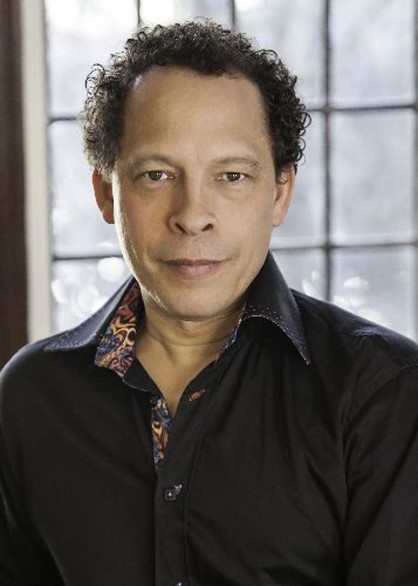
Classical characters of world literature such as Anna Karenina, Hagar Shipley, Sherlock Holmes, Harry Potter, Molly Bloom, Aminata Diallo’s diverse, migratory, brave but unfortunate life awakens the curiosity of Lawrence Hill, a Canadian teacher, researcher and sensitive person. In irresistible pursuit, he also started following Aminata from that village of Bio in Mali. Tracking Amina’s childhood, adolescence, youth, and old age, Amina’s best man presents an epic narrative of Amina’s life in his multi-award-winning The Book of Negroes. This epic five hundred and six page novel published by Harper Collins sheds light on a dark period in human history and reveals many undiscovered facts and truths.
The work required the author to travel from his home in London, Ontario to Nova Scotia, England to West Africa. The novel spans the seventeenth century. The author has taken five years to gather information for this single book, verify its historical authenticity, observe old historical documents, and understand the geopolitical and social conditions of the contemporary world. The product of his tireless devotion ‘The Book of Negroes’ was selected as a best seller in Canada. And won the Commonwealth Writers Award (with an invitation to meet the Queen personally), CBC Radio’s Canada Reads Award, the Rogers Writers Trust Fiction Award, etc. The book’s television mini-series was widely read and won eleven Canadian Screen Awards and an American NAACP (National Association for the Advancement of Colored People) award. In addition to the classic novel, Laurence Hill has won several other awards for his nine other books.
Growing up in the Don Mills area of Toronto in the sixties, Lawrence Hill’s interest was the search for human roots. The considerable influence of the work of human rights activist parents can be seen in his other literary works as well. In his early life, Lawrence’s dream was to become a runner and win gold in the Olympics. It didn’t happen. Definitely decided to be a writer. At the age of 14, he wrote his first story on his mother’s typewriter – not even that. The story is very bad, did not get it. But only the beginning. During his professional career, he worked as a journalist for Globe and Mail and other newspapers. He is also proficient in Spanish along with fluent French. Laurence Hill holds a BA in Economics from Laval University in Quebec and a MA in Writing from Johns Hopkins University in Baltimore. Worked outside of Canada in America, Spain, France, Cameroon, Niger and Mali. Hill is currently working on a new novel and children’s book. He is also involved as a co-writer in the adaptation of his novel The Illegal into a mini television series. Lawrence Hill is currently Professor of Creative Writing at the University of Guelph. In recognition of his work, Hill has received five honorary doctorate degrees, the Governor General’s History Award and the Order of Canada, inducted into Canada’s Walk of Fame.
Author Lawrence, while naming his novel, first struggled with ‘Migration’, then borrowed a line from Jonathan Swift’s poem ‘Elephants for Want of Towns’. Later, while researching the 150-page British Naval Ledger called ‘Book of Negroes’, he decided that the name of his novel would be ‘The Book of Negroes’. This is the list of three thousand ‘Back to Africa’ Black Loyalists that the author’s main character Aminata prepared for the British army over months. Interestingly, the author says, it was only after receiving an invitation from the Queen of England after winning the Commonwealth Prize that he was lucky enough to see the 215-year-old original Book of Negroes ledger housed in the UK’s National Archives. Until the early 18th century, this document was the largest black document in North America.
I remember watching Alex Haley’s ‘Roots’ series on Bangladesh Television a long time ago, I was moved by fear. After that, I almost forgot about the black people living on this planet because of the space and time gap. After a long time in Canada, I felt the urge to read the original novel after watching Lawrence Hill’s The Book of Negroes series on CBC television in 2015. Unbelievable but true, even though the slave trade has been legally abolished, millions of unfortunate people around the world are still victims of indirect slavery, racism and exploitation. Even, in this 21st century, the author has to face irony with the publication of this novel we are talking about. Just before the novel was published in 2007, its publisher, American W. W. Norton & Co. The name of the book was changed to ‘Someone Knows My Name’. The reason given to the author is that American bookstores are not interested in buying books because of the word ‘Negro’ on the cover. On the other hand, when the novel named ‘Het Negerboek’ was published in the Netherlands in accordance with the title of the book, a group of Dutch people of Surinam origin protested by burning the book in an Amsterdam park. When CBC Television and BET (Black Entertainment Television) bought the television rights to the novel as Book of Negroes, publisher W, W. Norton & Co. Agree to publish the book under the same name!
Black people around the world, despite the end of the slave trade, continue to suffer discrimination and racism. Initially, the term ‘nigger’, then ‘negro’, was used to refer to black people as offensive and derogatory. Instead, Black or Afro-American or Afro-Canadian are now more acceptable. However, our novel is not only a novel but also a reliable historical document to understand black people around the world, their history, culture and lifestyle.
[Sayed Yadid, a renowned thinker and translator of Toronto’s Bengali community, died of cancer on May 29, 2022 at the age of sixty-six. His outstanding work before his death was the Bengali translation of the world-winning novel The Book of Negroes by the innumerable Canadian author Lawrence Hill, which is still awaiting publication – Editor]

