
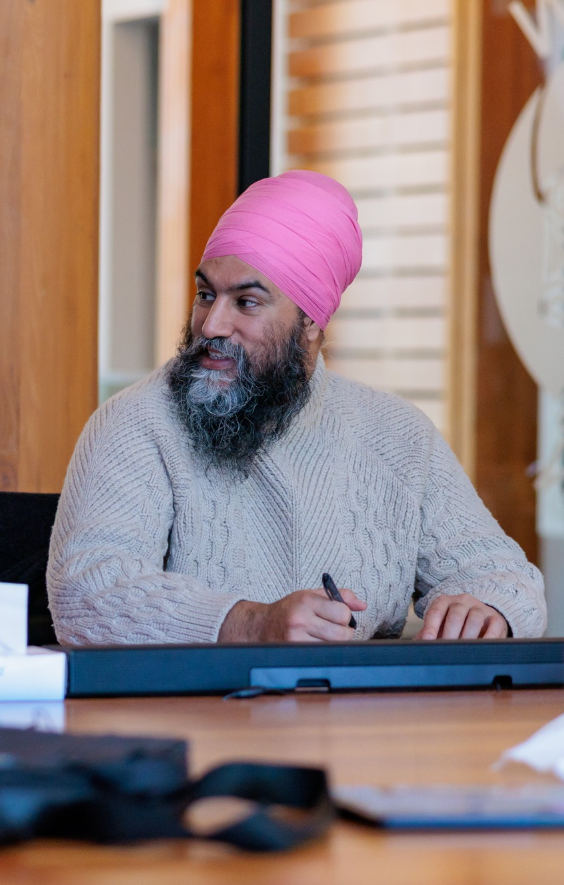
After more than two years of propping up Justin Trudeau’s minority government, Jagmeet Singh and the NDP have finally had enough. On Wednesday, Singh announced he was walking away from the “supply and confidence” agreement that kept Trudeau afloat, accusing the Liberals of being “too weak, too selfish” to fight for Canadians.
Frankly, it was a breakup long overdue.
The deal, struck in March 2022, was never a coalition but rather a lifeline for the Liberals. In exchange for NDP support on confidence votes, Trudeau’s government agreed to move on some of the NDP’s policy priorities, like dental benefits for low-income families and a national pharmacare program. On paper, it was historic the first such arrangement at the federal level. In practice, it was always a gamble: the NDP traded political leverage for policy wins, while Trudeau bought himself stability without having to earn a majority.
For a while, Singh sold it as pragmatic politics. Canadians, after all, got tangible benefits. But politics is also about timing, and in the past year the cracks became impossible to ignore. From a housing crisis that feels like quicksand to stubborn inflation, Trudeau’s Liberals have been floundering. Polls show them sinking down by nearly 20 points behind Pierre Poilievre’s Conservatives. Meanwhile, the NDP risked looking like little more than Trudeau’s crutch.
The breaking point came with the Liberals’ handling of railway strikes, when Ottawa pushed binding arbitration instead of siding with workers. For a party that claims to stand with labour, it was a bitter pill for Singh. From that moment, the clock was ticking on the deal.
So now the arrangement is over. But here’s the key: Singh hasn’t guaranteed he’ll immediately topple the government. He says every confidence measure will now be a case-by-case decision. Poilievre, unsurprisingly, blasted Singh’s move as a “stunt” after all, the Conservative leader would love nothing more than an election tomorrow, when the polls tilt heavily in his favor.
Trudeau, for his part, insists he can make Parliament “work” and is hoping to limp along until fall 2025. That feels optimistic at best. Minority governments rarely end on their own terms, and with the NDP no longer bound by agreement, Trudeau’s days of easy survival are over.
The bigger question is what Canadians want. After nearly a decade of Trudeau, many are restless, even angry. Affordability, housing, and cost-of-living pressures dominate kitchen-table conversations, and the government looks out of touch. Singh clearly decided it’s better to break free now than risk being seen as Trudeau’s enabler any longer.
Will it pay off? That depends. The NDP did secure some real gains from the deal, but voters may not reward Singh if they believe he propped up an unpopular prime minister for too long. What’s clear, though, is that Canadian politics just got a lot more unpredictable.
For Trudeau, the safety net is gone. For Singh, the gamble is on. And for Canadians, the prospect of heading back to the polls suddenly feels a lot closer.

