
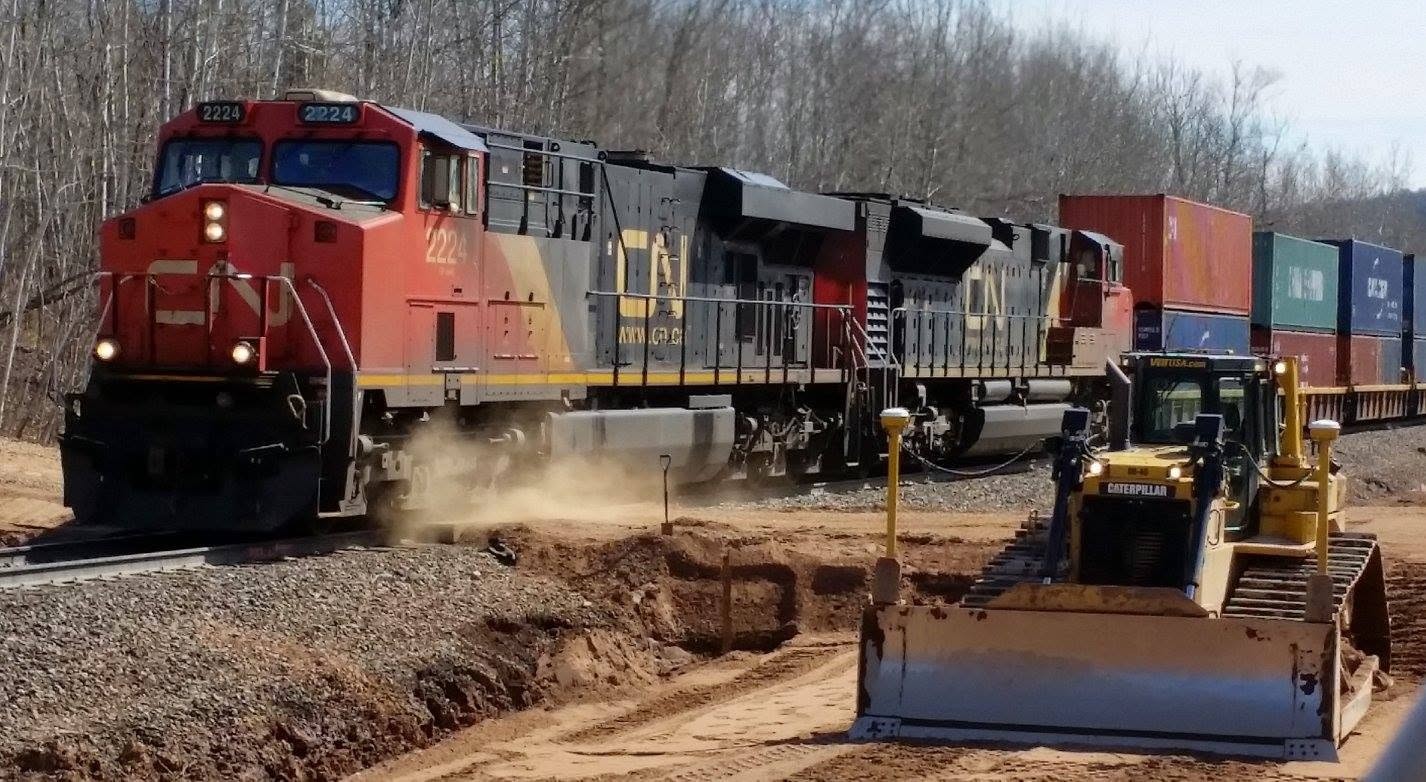
Canadian National Railway Co. has agreed to stand down as one of the most vocal opponents of Union Pacific Corp.’s bid to acquire Norfolk Southern Corp., after the two railways struck a deal late Wednesday that reshapes track access across a swath of the American Midwest and South.
The binding memorandum of understanding, announced by both companies, gives CN new operating rights on Union Pacific track and resolves a lingering ownership dispute over jointly held terminal railroads one of the sticking points regulators had flagged with the proposed tie-up. In exchange, CN will no longer fight Union Pacific’s push to absorb Norfolk Southern, the fourth-largest railroad in the U.S., in a deal that would create the country’s first true transcontinental freight carrier.
Union Pacific first unveiled its intention to buy Norfolk Southern a year ago, in a transaction valued at roughly US$85 billion. If completed, it would combine the second- and fourth-largest American railroads and hand the resulting company control over an estimated 40 percent of the country’s rail freight a level of consolidation that has alarmed shippers, regulators and rival carriers alike, who warn it could squeeze customers on price and choice.
Union Pacific and Norfolk Southern have countered that the scale of a combined network would cut costs and force competitors to sharpen their own rates in response.
“I said from Day 1 that our merger will create a stronger railroad industry that delivers better service for customers. Our agreement with CN Canadian National reinforces those commitments,” Union Pacific chief executive Jim Vena told analysts Thursday morning during the company’s second-quarter earnings call. Vena spent decades at CN before crossing over to lead its larger rival.
Under the terms of the agreement, CN will be allowed to run trains over more than 200 kilometres of Union Pacific track in Illinois, between Tuscola and East St. Louis, and will gain the right to serve customers along the corridor between St. Louis and Kansas City, Missouri territory it has not previously served directly. CN is also acquiring Norfolk Southern’s ownership stakes in two jointly held terminal operators, the Kansas City Terminal Railway Company and the Terminal Railroad Association of St. Louis, addressing a structural concern the Surface Transportation Board had raised about Union Pacific potentially gaining outsized control of shared infrastructure.
In a related but separate arrangement one that does not depend on the merger’s approval Union Pacific will also grant CN running rights between Memphis and Eagle Pass, Texas, a border town on the Rio Grande. CN chief executive Tracy Robinson called the arrangement “a natural extension of our north-south franchise” that would open new routes, give customers more options and strengthen rail links between Canada and Mexico.
The exchange isn’t one-sided. As part of the agreement, Union Pacific will receive expanded operating rights over CN’s Elgin, Joliet & Eastern Railway, the belt line that loops around the greater Chicago area one of the busiest and most congested rail junctions in North America.
None of it takes effect automatically. Both the network-access deal and CN’s non-opposition to the merger are contingent on sign-off from the Surface Transportation Board, the U.S. rail regulator reviewing Union Pacific’s application. The board rejected an earlier, amended version of the merger filing in May, saying it lacked sufficient detail, and ordered the companies to submit a more complete application.
CN’s about-face removes one prominent critic from the fight, but it does not guarantee the merger’s approval. Other shippers, labor groups and competing railroads have raised similar concerns about market concentration, and the board’s review along with whatever revised application Union Pacific ultimately files will determine whether the deal, and the side agreements tied to it, ever take effect.

