
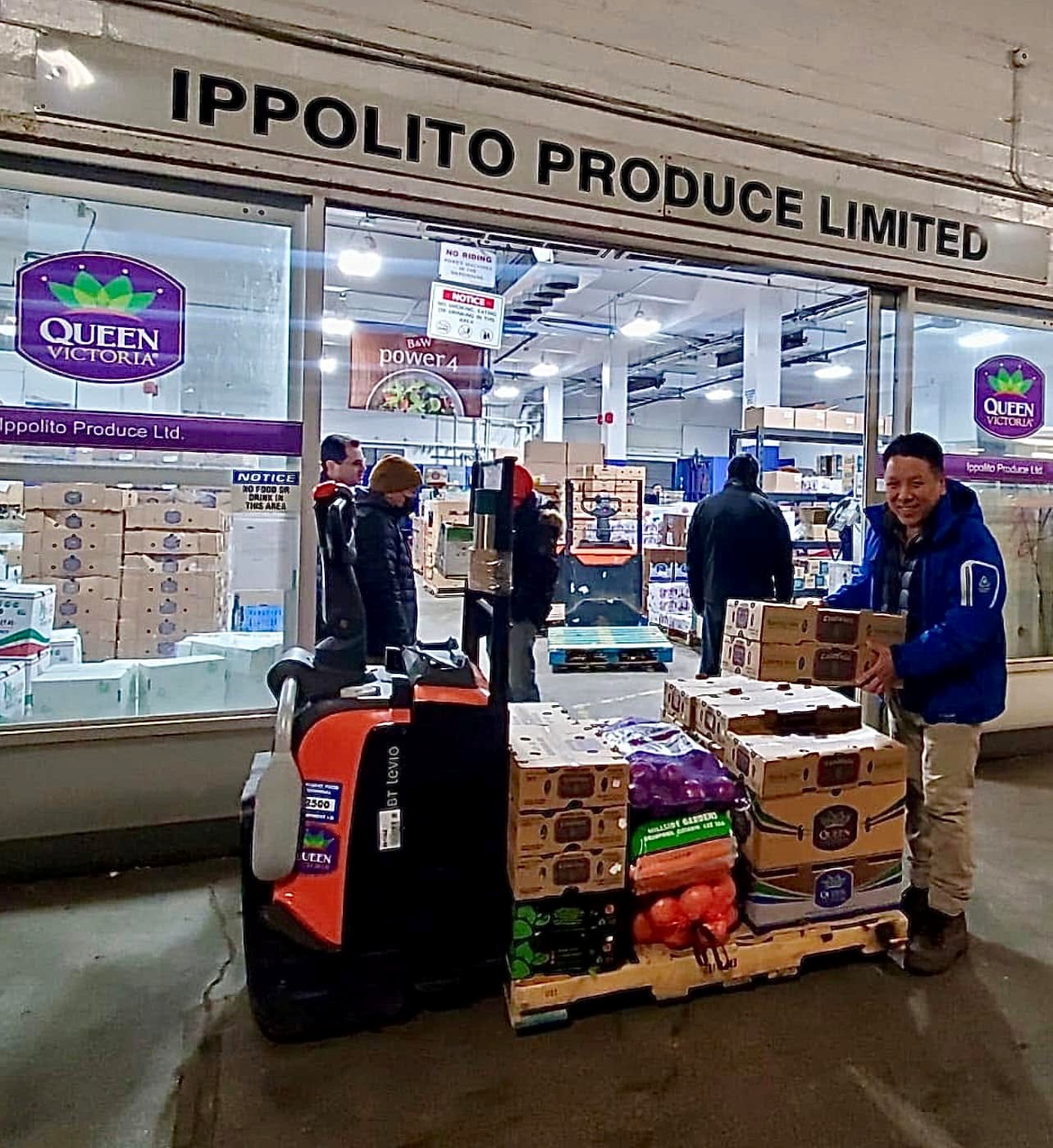
Standing at one of the country’s busiest wholesale produce hubs, Prime Minister Mark Carney made a striking declaration Wednesday: Canada, a nation that exports wheat and canola to the world, currently imports nearly 90 percent of its fresh fruit and relies on foreign suppliers for more than 70 percent of its vegetables. That, he said, ends now.
Carney unveiled a sweeping national food strategy backed by up to $3.2 billion in public funding, a plan designed to drive down grocery prices, supercharge domestic food production, and loosen Canada’s deep dependency on international supply chains all at a time when trade tensions and tariffs are rattling households from coast to coast.
“The core is to move from reliance to resilience,” Carney told the crowd gathered at the Ontario Food Terminal in Etobicoke. “A country that can’t feed itself or fuel itself or defend itself isn’t truly sovereign.”
The plan rests on four main priorities: ramping up competition in the grocery sector, processing more food on Canadian soil, extending year-round domestic production of fruits and vegetables, and slashing regulatory red tape that has long hampered the food supply chain.
“We are an agricultural superpower, yet for most Canadians it doesn’t feel like that at the checkout counter,” Carney said, noting that grocery prices have surged nearly 35 percent since 2019, leaving the average Canadian family spending roughly $10,000 per year about $800 a month just to keep their kitchens stocked.
The centrepiece of the announcement is a $1 billion Food Link Fund aimed at building out food infrastructure over the next decade. That includes expanding existing distribution terminals, breaking ground on two new food terminals by the end of 2028, and establishing 40 commercial food hubs across the country to help farmers store, process, and move their products more efficiently.
Ottawa is also targeting measurable short-term outcomes: a 15 percent increase in the number of independent grocers sourcing from food terminals and hubs within four years, and a 25 percent boost in local food sales from small and medium-sized producers over the same period.
Another major piece of the puzzle is $650 million directed at technology to support controlled-environment agriculture an umbrella term that covers vertical farms, greenhouses, and precision growing systems that use artificial lighting, climate controls, and hydroponic cultivation to produce crops regardless of season or geography.
Carney also set aside $100 million specifically for boosting food production in rural and northern communities, regions that often face the steepest grocery bills and the most fragile supply lines.
A separate $750 million over seven years will fund regional food distribution hubs to expand the production of Canadian fruits and vegetables and help farmers get their goods to market more efficiently.
One of the sharper edges of the announcement was Carney’s criticism of how little food processing actually happens in Canada despite the country’s vast agricultural output.
“For decades we’ve been paying other countries to convert what we already have into what we need,” he said, arguing that a stronger domestic processing sector would both create jobs and insulate Canadians from price shocks rooted in international logistics.
To address this, Carney announced a $1 billion fund through Farm Credit Canada to support food production and processing operations nationwide. However, technical briefing documents circulated before the announcement indicated that this money would be drawn from existing FCC financial resources rather than representing new federal spending a distinction that is likely to draw scrutiny from opposition critics.
The strategy also takes aim at the structure of Canada’s retail food market, where five major supermarket chains account for roughly three-quarters of all grocery sales. Carney said the government will work with the Competition Bureau and Competition Tribunal to more aggressively pursue anti-competitive behaviour in the food industry.
He also signalled incoming legislation before the end of June to overhaul federal privacy laws, with a direct focus on what he called “surveillance pricing” the practice of using consumer data to charge individuals higher prices based on their browsing or shopping habits.
“Companies can no longer use it to charge you higher prices,” Carney said.
Officials were careful to stress that the broader food plan is not intended to displace existing supermarket chains or interfere with trade flows, but rather to foster more competition and, in turn, push prices downward.
On the regulatory front, the Canadian Food Inspection Agency will be handed new responsibilities aimed at smoothing interprovincial trade. Among the notable changes: a temporary exemption that would allow small-scale livestock producers to use slaughterhouses in other provinces when local capacity is insufficient. The move is intended to reduce transportation costs and strengthen food security in remote and rural areas.
The CFIA will also be expected to speed up its review process for agricultural inputs including fertilizers, animal feeds, veterinary products, and seeds with a target of cutting approval timelines by approximately one-third.
The announcement did not come without political friction. Conservative Leader Pierre Poilievre, speaking the day before Carney’s reveal, laid the blame for Canada’s food affordability crisis squarely at the government’s doorstep.
“Two in five people in Canada are struggling to put food on the table,” Poilievre said, citing recent data from the United Way. “Forty percent are losing sleep, wondering how they will stretch their paycheque.”
Poilievre argued that high federal spending, persistent deficits, and the industrial carbon tax have inflated costs throughout the entire food supply chain from the farm to the checkout line. His alternative prescription involves eliminating the industrial carbon tax, reducing the federal deficit to ease inflationary pressure, scrapping federal taxes on fuel to lower transportation and household costs, and accelerating resource development to strengthen the Canadian dollar and lift wages.
Whether Carney’s strategy marks a genuine turning point in Canadian food policy or a collection of well-packaged pledges will likely depend on how quickly the funding flows and whether the promised infrastructure materialises on schedule.
What is clear is that the political pressure to act is real. With grocery bills consuming an ever-larger share of household budgets and trade volatility exposing the fragility of import-dependent supply chains, the debate over who Canadians feed themselves and at what cost has moved firmly to the centre of the national conversation.
“We’re going to grow more at home, process more at home, and feed more Canadians with Canadian food,” Carney said.
For millions of families already stretching every dollar at the checkout counter, the proof will be in the prices.

