
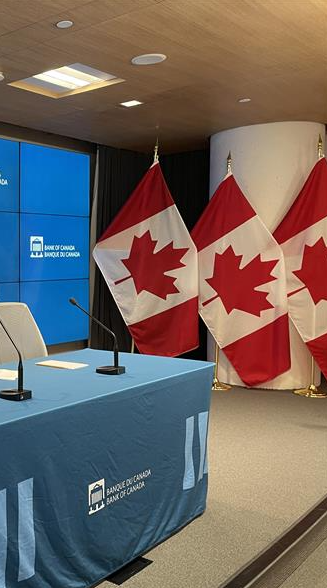
By standing firm on the Bank of Canada’s 2 percent inflation target, Governor Tiff Macklem has sent a clear signal: while the world around Canada may be changing rapidly, the central bank is not ready to abandon the anchor that has guided monetary policy for decades. Yet beneath that confidence lies an admission that the inflation battle ahead may be tougher not because of domestic demand alone, but because of a far more unpredictable global environment.
Macklem’s remarks in Montreal underline a crucial reality. The inflation framework itself is not broken. In fact, the Bank of Canada’s record speaks for itself, with inflation staying within the 2 to 3 percent range most of the time over the past 25 years. Even the COVID-19 shock arguably the biggest economic stress test in a generation did not dismantle the system. Inflation surged, but aggressive interest rate hikes eventually brought it back down from a peak of 8.1 percent in mid-2022 to near-target levels by 2024.
What has changed, however, is the world Canada operates in.
Trade protectionism, rising tariffs, geopolitical flashpoints, and climate-related disruptions are no longer occasional risks; they are becoming permanent features of the global economy. Macklem’s warning that these forces could push inflation higher is not alarmist it is pragmatic. Tariffs raise costs. Supply chain disruptions constrain availability. Geopolitical tensions inject volatility. Together, they create inflationary pressure that central banks cannot easily control with interest rates alone.
This is why the Bank’s insistence on maintaining the 2 percent target matters. In uncertain times, credibility becomes policy. By reaffirming the target, the Bank of Canada is telling households, businesses, and markets that it will not chase short-term political or economic convenience. Inflation expectations, once unanchored, are notoriously difficult to rein in. Macklem appears determined not to repeat that mistake.
That said, Canadians may feel a disconnect between official inflation numbers and their lived experience especially at the grocery store. While overall inflation has hovered close to target for over a year, food prices remain stubbornly high. The forecast that food inflation could run between 4 and 6 percent next year, adding nearly $1,000 annually for a family of four, is a reminder that “price stability” does not always feel stable at the checkout counter.
Macklem is technically correct in noting the difference between slowing food inflation and falling food prices. But politically and socially, that distinction offers little comfort. For many Canadians, persistent food costs risk becoming the most visible symbol of economic strain, regardless of what headline CPI numbers show.
Beyond inflation, Macklem’s comments on stablecoins hint at another major shift on the horizon. By calling them the “next frontier of digital money,” he acknowledges that finance itself is evolving. Canada’s move toward regulating stablecoins mirroring steps already taken in the U.S. suggests a desire to balance innovation with stability. Properly regulated, stablecoins could improve cross-border payments and efficiency. Poorly regulated, they could introduce new financial risks.
Here again, Macklem’s emphasis on strong backing, convertibility, and international coordination reflects caution rather than enthusiasm. The message is clear: innovation is welcome, but not at the cost of financial stability.
In the end, Macklem’s speech was less about reassurance and more about realism. Canada’s inflation framework is holding but the forces acting upon it are growing stronger and more complex. The Bank of Canada can control interest rates. It cannot control wars, tariffs, or climate shocks. Navigating that gap will define monetary policy in the years ahead.
The 2 percent target remains the compass. The journey, however, is likely to be far rougher than before.

