
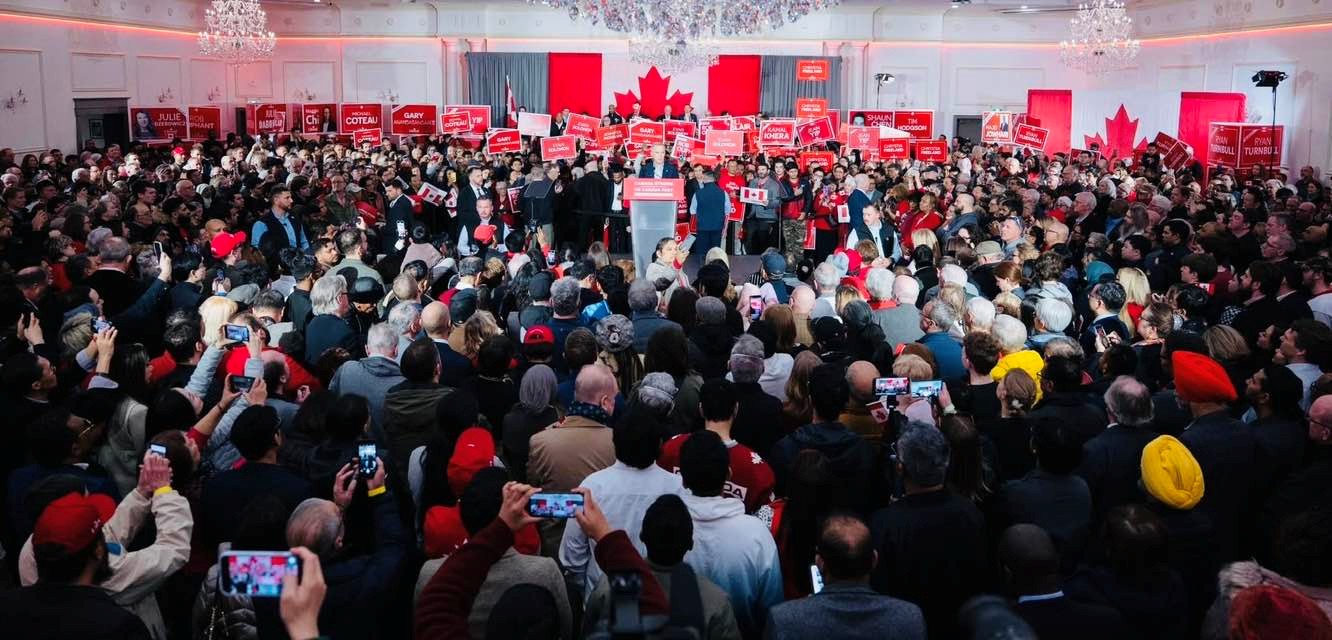
Prime Minister Mark Carney’s newly unveiled cabinet is a political balancing act—one that attempts to fuse experience with fresh energy, while signaling a decisive shift in tone and strategy from the Trudeau years. The May 13 announcement revealed a government both leaner in spirit and larger in form, aiming to sharpen its focus while accommodating the diverse pressures of a post-pandemic, climate-conscious, and economically anxious Canada.
At first glance, Carney’s “smaller and more focused” cabinet might seem contradictory, given its expansion to 28 ministers and the revival of 10 secretaries of state. But this isn’t a return to bloated bureaucracy—it’s a structural evolution. The tiered cabinet signals Carney’s intent to streamline high-level decision-making while giving new MPs a chance to build experience and shape key files without being overwhelmed.
This blend of old and new is most evident in the returning heavyweights. François-Philippe Champagne remains a central figure, continuing as finance minister while also taking on national revenue—clearly, Carney sees him as the economic cornerstone of the government’s agenda. Meanwhile, Dominic LeBlanc’s shift to focus exclusively on Canada-U.S. trade and a broader “One Canadian Economy” strategy suggests a pivot toward internal coherence and cross-border pragmatism.
Anita Anand’s reassignment to foreign affairs—swapping places with Mélanie Joly—may seem surprising, but it reflects the prime minister’s faith in her diplomatic deftness. And then there’s Chrystia Freeland, back from the political wilderness to oversee transport and internal trade, signaling Carney’s willingness to prioritize function over optics. Freeland’s dramatic resignation last December may have symbolized Trudeau’s unraveling, but her return indicates Carney’s refusal to sideline proven performers for the sake of symbolism.
Still, some major departures demand reflection. Bill Blair, Jonathan Wilkinson, and Ginette Petitpas Taylor were familiar faces in Ottawa’s power circles—respected, reliable, but perhaps too closely tied to the political status quo Carney seeks to disrupt. Their exit marks a clear turning of the page.
The new faces, many of them newly elected MPs, represent Carney’s push to refresh the Liberal brand. Evan Solomon’s jump from journalism to the ministerial bench is an audacious move, one that reflects Carney’s appetite for outside-the-box thinking. Gregor Robertson’s appointment as housing minister brings urban credibility to a portfolio that desperately needs bold, scalable solutions. And Tim Hodgson, a longtime Carney confidante, now controls natural resources and energy—a critical portfolio as Canada navigates the global energy transition.
Marjorie Michel’s appointment as health minister offers continuity and familiarity to those who worked with her in Trudeau’s office, but also signals generational and cultural renewal. And the inclusion of prominent advocates like Nathalie Provost and aviation expert Stephen Fuhr in junior roles hints at a government trying to ground its policymaking in lived expertise.
Yet, this isn’t just a reshuffle for headlines. There’s a strategic thread tying it all together: economic cohesion, international realism, and institutional discipline. Whether it’s through the targeted mandates—like “One Canadian Economy” or internal trade reform—or the smart portfolio pairing, Carney is placing results above rhetoric.
That said, challenges remain. The Liberals are a few seats shy of a majority. The opposition is weakened but not defeated, and floor crossings or informal alliances may determine the longevity of this government. Carney’s cabinet must produce not just competent governance, but palpable progress on affordability, climate, reconciliation, and innovation.
In tone and structure, this cabinet is unmistakably Carney’s: managerial, mission-driven, and data-oriented. If Trudeau governed with big promises and bigger personalities, Carney appears intent on governing with precision and performance.
Only time will tell if this team lives up to its billing. But for now, Canadians have been offered a fresh start—rooted in experience, infused with new voices, and built for what Carney rightly calls a “hinge moment” in the country’s history.

